Business & freelance
The art of a clean hand-off
Set the scope, write it down, and price the one-more-thing requests
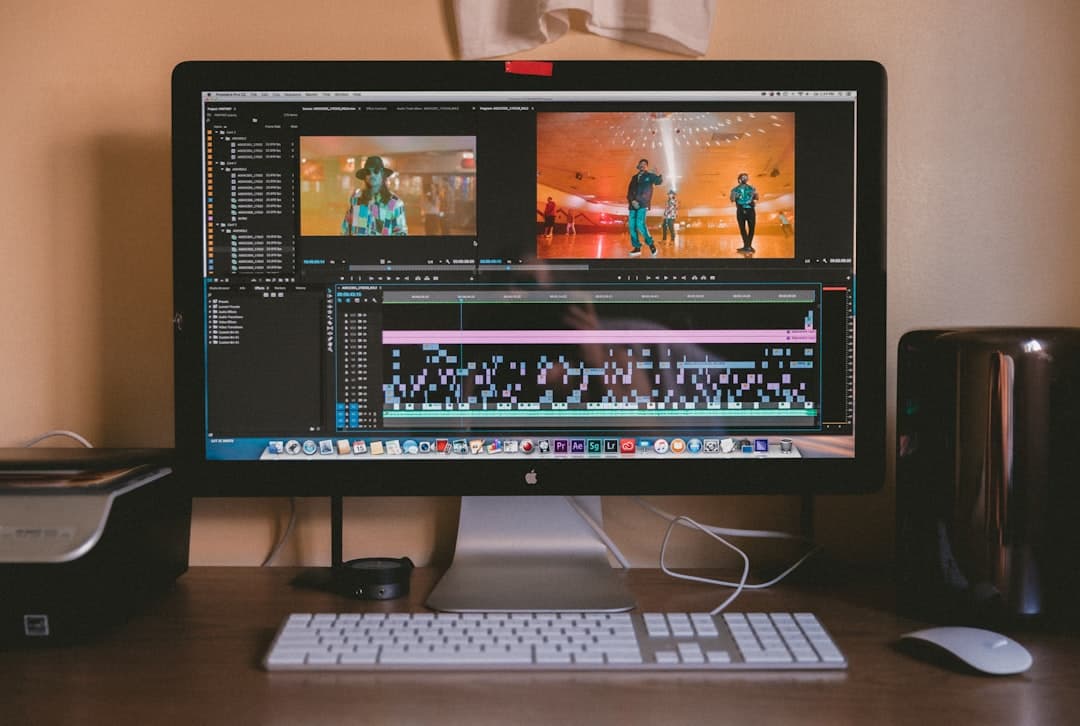
Photo by Jakob Owens on Unsplash
Why the hand-off matters
Most freelance horror stories don't start in the work. They start at the end.
You shoot the video. You deliver. The client says, "Great — can we just tweak the intro?" You tweak. They come back: "And one more thing — can you add a 30-second cutdown for Instagram?" You add. Three weeks later you've done four extra rounds of work, you haven't billed for any of it, and the client has stopped responding to your invoice for the original project.
This is what a bad hand-off looks like. The work didn't end where the contract did, because there wasn't a contract — or the contract didn't say where the work ended.
A clean hand-off is the opposite: you deliver what you were hired to do, the client signs off, you collect final payment, and any new requests become new conversations with new prices. It sounds obvious. It is not what most beginner freelancers do.
This lesson is about three habits that make hand-offs clean:
- Knowing what you were hired to do — and what you weren't.
- Writing it down before the work starts.
- Charging for changes when they show up.
Build these three habits and the rest of the freelance business gets a lot easier. Skip them and you'll spend years working for free without realizing it.
What you were actually hired to do
The first habit is the word scope.
Scope is what you were hired to do, in writing, before you started. Not what the client wishes you would do. Not what feels reasonable. Not what you'd do if they were nice about it. The specific deliverables you agreed to produce, in exchange for the specific amount you agreed to charge.
Beginner freelancers skip scope because they think of the work as a vibe. "I'm going to shoot their brand video." That's not scope — that's a vibe. Scope is specific. It says how many shoot days, how many deliverables, what file formats, what runtime, how many revisions.
Here's what defining scope looks like in practice. The client says: "We need a brand video." You say: "Got it. Just so we're aligned, here's what I'm hearing — let me know if I missed anything:
- One shoot day, at your office, with up to three on-camera interviews.
- One main video, around 90 seconds, delivered in 4K master plus a 1080p web version.
- One 30-second cutdown for social.
- Two rounds of revisions on each.
- Final delivery within 3 weeks of the shoot.
- Total: $X."
That's scope. Six bullet points. Took you 30 seconds to write. And it just saved you a month of unpaid extra work.
Notice what's NOT in there: "I'll also shoot some B-roll for your website." "I'll color-grade other footage you have lying around." "I can do an extra cutdown for LinkedIn." Those might be reasonable asks later — but they are not what you were hired to do, and they have their own price.
The instinct beginners have is to be generous: "Sure, I can throw in a cutdown for free." Stop doing that. Every "I can throw in" you offer up front becomes the new baseline the client expects on the next project, from the next freelancer, forever. You are training the entire industry to expect free work. Don't.
Generous comes after the work, not before. Deliver more than you promised. Promise exactly what you'll deliver.
Talking about scope with a client
If you're new to this, the word scope might feel corporate. You don't have to use it out loud. Plain English works fine:
- "Here's what's included."
- "Here's what I'll deliver."
- "These are the pieces of the project."
What matters is that there's a list. The client can read the list. You both agree on the list. The list becomes the thing.
If the client pushes back — "Do we really need to be that specific?" — gently push back. "Yeah, this just keeps both of us on the same page. If the project grows, we can talk about it. But this is what the price covers." That's not rude. That's professional. Clients who balk at written scope are the clients who later "forget" what they hired you for.
Put it in writing
The second habit: write it down.
Specifically, write it down before you start the work, send it to the client, and get a written reply that says some version of "Looks good." Email is fine. You don't need a lawyer.
Verbal agreements aren't worth what they cost to make. Not because clients are dishonest — most aren't — but because human memory is bad and projects change. You will remember the conversation one way. The client will remember it another way. Six weeks later when you're arguing about whether a second cutdown was included, neither of you will be able to prove anything.
Writing it down is the only fix. The piece of paper doesn't have to be fancy. It has to exist.
A minimum-viable freelance agreement
For a first-time freelancer, here's a complete agreement that fits in one email:
Project: Brand video for [Client].
Deliverables:
- 1 main video, ~90 seconds, 4K master + 1080p web cut.
- 1 social cutdown, ~30 seconds.
- Up to 2 rounds of revisions on each.
Shoot: 1 day at your office, [date].
Final delivery: 3 weeks after the shoot day.
Fee: $X, paid 50% before the shoot and 50% on final delivery.
Out-of-scope changes: Any added deliverables, additional revisions beyond the two included, or revisions to footage shot for a different project will be quoted separately before I do them.
Cancellation: If the project is cancelled after the shoot day, the 50% deposit covers the shoot and is non-refundable.
Let me know if that all looks right and I'll get the shoot on the calendar.
That's it. One email. Eight bullet points. It will save you more time, money, and stress than any contract a lawyer could write you in your first year.
A few things to notice:
1. The deposit. Asking for 50% before the shoot does two things. It pays for your shoot day even if the client disappears afterward — and clients disappear more often than you'd think. And it filters out clients who weren't serious. A real client will pay a deposit without flinching. A flaky one will get cold feet here, which is information you wanted anyway.
2. The out-of-scope clause. This is the most important sentence in the whole agreement. It's the sentence you'll point to in three weeks when the client asks for "just one quick thing." More on that in the next section.
3. The cancellation line. If the client cancels after you've already shown up and shot, you keep the deposit. Beginners feel guilty about this. Don't. You blocked off the day. You did the work. You're owed for the day.
When the client wants a "real" contract
Some clients (especially larger brands, agencies, and government work) will send you their own contract instead. That's fine. Read it. Look for three things:
- Payment terms. "Net 30" means they pay 30 days after invoice. "Net 60" or "Net 90" is slower and you need to know. If the terms are awful, you can sometimes negotiate them.
- IP transfer. Most contracts assume the client owns the final video. That's normal. But some try to assign rights to all your raw footage, all your behind-the-scenes stills, and your right to ever mention the project. Push back on overreach.
- Indemnification clauses. If you can't understand a clause, ask. If the clause says you're personally liable for everything that goes wrong, including things that aren't your fault, that's worth pushing back on.
You don't need to be a lawyer. You need to read the thing and ask questions. "Hey, can you walk me through what this clause means?" is a totally professional question. Better to ask now than to find out later.
When the client wants more
This is the moment every freelance horror story turns on. The client asks for one more thing. You say yes. The hand-off becomes a hand-cuff.
The professional term for "one more thing" is a change order (or a scope change). It means the work has grown beyond what you agreed to do, and the price needs to grow with it.
The sentence to memorize is short:
"Yeah, I can do that — here's what that adds to the project."
You're not refusing. You're not being difficult. You're acknowledging that the request is reasonable and pricing it. The client gets to decide whether the extra value is worth the extra cost. That's not your problem to feel weird about.
Beginners hate this sentence because it feels confrontational. It isn't. Confrontational would be "No." This is "Yes, with a price." Clients respect this. The ones who don't are the ones you'd be better off losing anyway.
What to charge for change orders
There's no perfect formula. A few rules of thumb:
Small revisions that take you under an hour and feel related to the original work: just do them. Pick your battles. If the client asks you to swap out a logo or fix a typo, fight that fight only if it's the fifth time they've asked.
Medium changes — an extra social cut, an alternate length, additional graphics, extra revisions beyond the two you included — quote them. A common rule is your hourly rate times the hours it'll take, with a 1.5× multiplier for rush work or anything that touches finished deliverables (because going back into a finished edit is more disruptive than building it the first time).
Big changes — a new shoot day, a whole new deliverable, reshooting an entire interview because they decided the messaging was wrong — those are nearly a new project. Treat them like one. Send a short follow-up agreement covering just the change. Get it agreed to before you start.
Sending the change order
A change order doesn't need to be a formal document. An email works. Three lines:
Hey [name] — happy to add the LinkedIn cutdown. That's an additional ~3 hours of editing, plus a quick revision round. Adds $X to the project total. Want me to go ahead?
That's it. The client either says yes (and you do the work and bill for it) or they don't (and the project ends where it was supposed to). Either outcome is fine. The one outcome that's not fine is the one where you do the work without an agreement and hope they'll pay you for it. They might. They probably won't.
The "we already paid you" trap
Sometimes a client will respond to a change order with: "We already paid you for this project — why am I getting charged extra?"
The answer is calm and clear. "You paid me for the deliverables in our original agreement — the brand video and the 30-second social cut. The LinkedIn cutdown is a new deliverable. Happy to do it, and here's what it costs. Or we can skip it, no hard feelings."
You're not being a jerk. You're holding a line that protects both of you. Clients who learn that all work is free start asking for more and more free work. Clients who learn that work has a price start being thoughtful about what they ask for.
A client who genuinely thinks they "already paid for everything" is a client who needs to be educated, not appeased.
The actual hand-off
When all the in-scope work is done — every deliverable produced, every revision used — it's time to close the project.
This part is short and mechanical:
-
Send the final files. All of them. The 4K master, the 1080p web cut, the 30-second social. Hosted somewhere durable — a Google Drive or Dropbox folder the client can download from. Don't make them ask twice.
-
Send the final invoice. Itemize what you delivered. Reference the original agreement. State the remaining balance and the due date. (Most freelancers use Net 14 or Net 30 for final invoices — give the client time, but not unlimited time.)
-
Send a short close-out email. "Final files attached / linked above. Final invoice for the remaining $X is on its way / attached. Thanks for the project — was a pleasure to work on. Let me know when it's live so I can share it." Friendly. Final.
-
Mark the project closed in your own system. Even if your system is a notebook. Write down the start date, end date, final amount, and what you'd do differently next time.
If a client comes back two months later wanting a tweak, that's a new conversation. Tiny tweaks you might do for free as a goodwill gesture (a typo fix, a swapped logo). Anything bigger is a new mini-project. Send a quick estimate and start the loop over.
The single most underrated thing you can do at close-out is ask if you can be referred to other clients. A happy client at the moment of delivery is the warmest lead source you have. "Glad you're happy with this. If you know anyone else who needs video work, I'd love an intro." That sentence has built more freelance careers than any portfolio site.
Common mistakes
- Scope is a paragraph, not a list. "I'll shoot your brand video" is not scope. A list of deliverables is.
- Verbal agreements. You will both remember the conversation differently. Write it down or it didn't happen.
- No deposit. You did a free shoot for a client who ghosted you. It hurts. Always take a deposit.
- Saying yes to everything. "Sure, I'll add that" said often enough turns a paid project into months of unpaid work.
- Apologizing for the price of a change order. You're not punishing the client by charging them. You're being professional.
- Skipping the close-out email. A project that doesn't end formally is a project that keeps generating "just one more thing" requests months later.
- Not asking for referrals. The single best moment to ask is right after a happy delivery. Don't skip it.
What to practice this week
Take your most recent project — paid or unpaid, finished or in progress — and write the agreement email for it from scratch. Eight bullet points. Deliverables, shoot details, delivery date, fee, payment schedule, out-of-scope clause, cancellation terms, sign-off.
You don't have to send it anywhere. You're practicing the structure. Once it's easy to write retroactively, it's easy to write up front on the next project.
Then, on the next project — even if it's just a favor for a friend — send the email before you start. Notice how the conversation changes. The client respects you more. You worry less. The hand-off, when it comes, is clean.
That's the whole skill.
More lessons
Browse all
Business & freelance
Showcasing your work online
A reel that gets calls back, a portfolio site that works, and the basics of being findable
Business & freelance
Breaking into freelance
Rates, contracts, and finding your first paid gigs without losing your shirt

Business & freelance
Bidding a commercial job
How working freelancers and small production companies price, scope, and win paid work
Found this useful?
Bookmark BOLD University and share it with someone learning the craft. New lessons go up regularly.
Back to University