Lenses
Anamorphic shooting
How 2x squeeze, oval bokeh, and lens flares add cinematic character — and what you give up to get them
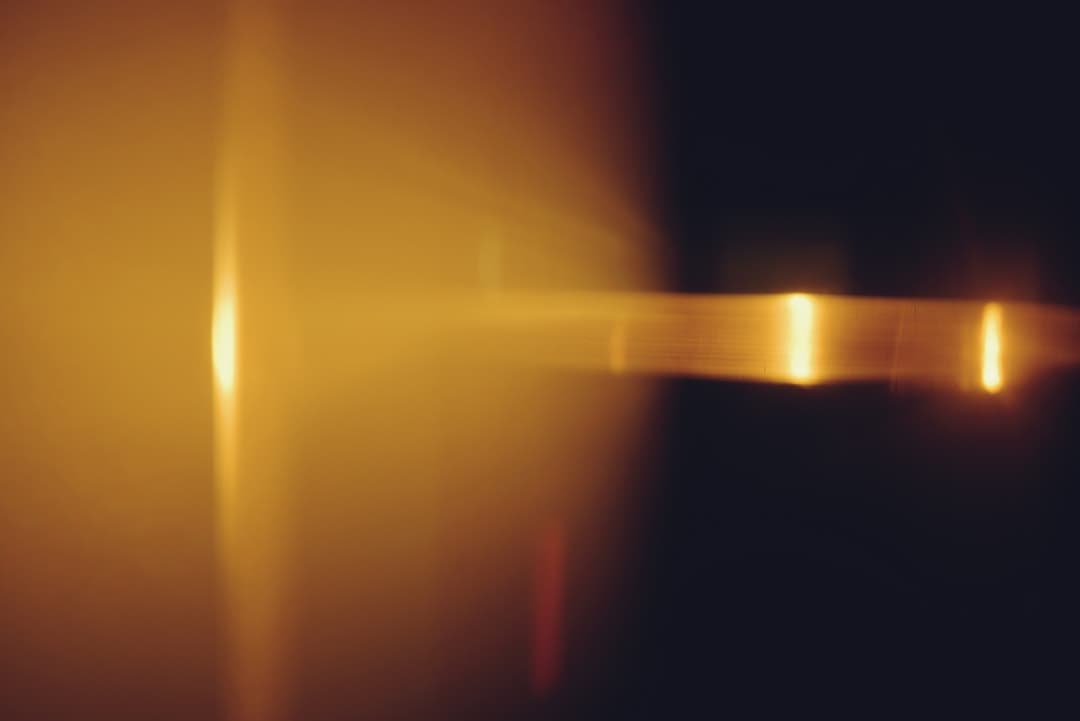
Photo by Liana S on Unsplash
What anamorphic actually is
A standard cinema lens (called "spherical") captures the world the way your eye sees it — circular elements, no distortion, what you see is what the sensor records.
An anamorphic lens does something different: it optically squeezes a wider field of view horizontally onto the same sensor. A 2x anamorphic lens squeezes twice as much horizontal information into the frame, so a normal 16:9 sensor records footage that, when un-squeezed in post, expands to a roughly 2.39:1 wide cinema aspect ratio.
That stretching of the horizontal axis (while the vertical stays normal) creates several visual characteristics that, together, are what people mean when they say "anamorphic look":
- Wider field of view without using a wider lens
- Oval bokeh — out-of-focus highlights are vertically squashed
- Horizontal lens flares — when light hits the front element, the streak goes sideways across the whole frame
- Particular depth-of-field falloff — perceived as "creamier" and more dimensional
Combined, this is the look of every Hollywood theatrical release for the last 50 years.
When to use anamorphic
Anamorphic shines in:
- Narrative film and high-end commercial work where the cinema feel is desired
- Music videos and high-style content that wants visual impact
- Anywhere a 2.39:1 wide aspect is the final delivery
It's NOT the best choice for:
- Documentary — anamorphic is slow to set up and pulls focus harder
- Run-and-gun ENG work — same reasons
- Vertical or square social formats — the wide aspect ratio is wasted
- Tight budgets on tight schedules — anamorphic lenses are expensive to rent, slow to operate, and demand more skilled focus pulling
The technical math
The "2x" in 2x anamorphic refers to the squeeze ratio. Other common ratios:
- 1.33x — found on Atlas Orion and similar modern anamorphics. Gives wider aspect but less of the dramatic flare.
- 1.5x — Vantage Hawk V-Lite, Cooke Anamorphic/i. Compromise between character and resolution.
- 2x — classic anamorphic look (Panavision, ARRI Master Anamorphic, Cooke S5/i). Strongest character.
The wider the squeeze, the more dramatic the visual character — but the more resolution you sacrifice horizontally (you're capturing extra horizontal area on the same sensor, then stretching it back in post).
What you give up
Anamorphic comes with real tradeoffs:
1. Focus is harder. Anamorphic depth of field falls off differently than spherical. The "sweet spot" of focus is narrower than people expect. A focus puller working anamorphic has to be more precise, more often. For solo work this is unforgiving.
2. Minimum focus distance is longer. You can't get as close to your subject. Tight close-ups of small objects often aren't possible. Macro work is out unless you add a diopter.
3. Lens speed is slower. Most cinema anamorphics open to T2.0 or T2.3, not T1.4. You'll need more light.
4. Slower to operate. Filters, follow focus, and matte boxes take longer to set up. The lenses themselves are heavier.
5. Cost. A new anamorphic prime kit runs $20k–$80k+. Renting for a 4-day shoot is $500–$2000/day depending on tier.
6. Distortion at the edges. Anamorphic produces noticeable barrel distortion, especially on wide focal lengths. Faces near the frame edge can look stretched.
Affordable alternatives
If you want the look without the full anamorphic budget:
1.33x anamorphic adapters. SLR Magic, Sirui, and Vazen sell 1.33x adapters that screw onto regular lenses. Cheaper, lower quality, but give 60-70% of the anamorphic character. Sirui in particular has gotten good for under $1500 per lens.
Sirui Saturn series. Native 1.6x anamorphic lenses for around $1200-1800 each — far below traditional cinema anamorphic pricing. Good for indie work.
Simulated anamorphic in post. Crop your spherical footage to 2.39:1, add a slight horizontal blur to bokeh, and overlay subtle horizontal flares. You won't fully fool a cinematographer, but for online content it's close enough.
Rehoused vintage anamorphics. Russian Lomo and Kowa lenses from the 80s/90s, rehoused for modern cameras. Around $3000-5000 per lens. Distinct vintage character — good for indie features.
The un-squeeze workflow
Footage shot anamorphic looks tall and squished on your camera monitor (vertically compressed). It needs to be un-squeezed in two places:
1. In camera monitor for framing. Most cinema cameras have a "de-squeeze" preview mode (typically 2x or 1.33x). Enable it during shooting so your operator sees the correct wide aspect.
2. In post. Drop the footage in your timeline and apply a 2x (or 1.33x) horizontal stretch. Resolve has built-in "Input Sizing" for anamorphic. Premiere requires a manual scale. After applying, the footage shows the proper cinema-wide aspect.
For final delivery, you typically:
- Render at 2.39:1 with letterbox or cropped to suit the platform
- Pillar-box (letterbox top/bottom) for theatrical delivery
- Crop top/bottom for online HD (1080p widescreen)
Lens characteristics by manufacturer
Each anamorphic line has its own personality. Some common ones:
- Panavision C/E/G/T-series — the classic Hollywood character. Strong horizontal flares, oval bokeh. Rental-only.
- Cooke Anamorphic/i — smoother flares, warmer image. Often called "less aggressive" anamorphic. T2.3.
- ARRI Master Anamorphic — clean, modern, almost spherical-quiet. T1.9. The choice when you want anamorphic frame without the strong visual quirks.
- Atlas Orion — affordable Hollywood-flavor anamorphic (under $30k for the lens set). T2.0. 2x squeeze with strong character.
- Sirui Anamorphic (full frame and APS-C) — entry-level option, 1.33x or 1.6x, $1200-1800 per lens.
Common mistakes
- Treating anamorphic like spherical. It needs different blocking, different focus, different lighting (more light because it's slower).
- Forgetting to un-squeeze in post. You'll wonder why your edit looks weird and tall before realizing.
- Pushing into the edges with faces. Anamorphic distortion at the edge of frame is unforgiving — keep important faces in the center 60% of the frame.
- Tracking too tight a subject. The narrow depth of field combined with the harder focus pull means you'll miss focus a lot. Either pull back or work with a real focus puller.
- Choosing it for the wrong job. Anamorphic on a corporate explainer is overkill. Use it when the format genuinely calls for the cinema look.
What to practice this week
If you have access to anamorphic glass — even a Sirui — shoot a 30-second piece. Same subject, two takes: one anamorphic at 2.39:1, one spherical at 16:9. Cut them side by side.
You'll feel the difference. The anamorphic feels more "produced." The spherical feels more "captured."
If you don't have anamorphic glass: shoot spherical at 16:9, then crop to 2.39:1 in your edit and add subtle horizontal flares from a flare overlay pack. Compare the result to anamorphic reference footage online. You'll see what's missing (the bokeh shape, the depth feel) — but you'll also understand what most viewers actually notice (the aspect ratio and flares).
That's the real lesson: anamorphic looks different, but format and lighting and shot selection do most of the heavy lifting toward "cinema." The lens is the finishing touch.
More lessons
Browse all
Audio
Audio fundamentals for video
Why bad audio kills good footage — and how to capture clean sound on a small crew
Audio
Multi-track audio workflow for narrative
Capturing lavs, boom, ambience, and timecode reference cleanly on a multi-input recorder
Business & freelance
Showcasing your work online
A reel that gets calls back, a portfolio site that works, and the basics of being findable
Found this useful?
Bookmark BOLD University and share it with someone learning the craft. New lessons go up regularly.
Back to University