On set
Tools you’ll find on a real film set
An illustrated tour of the gear cart for newcomers
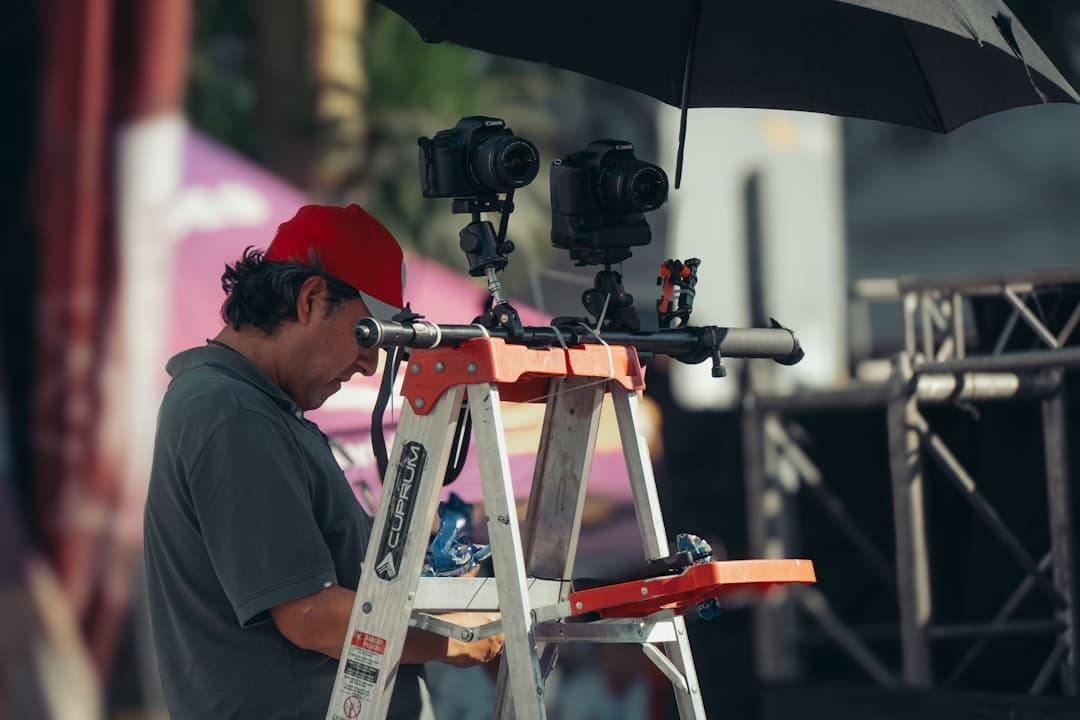
Photo by RETRATO DEPORTIVO on Unsplash
Walking onto a set for the first time
Your first day on a working film set is disorienting. Carts everywhere. People shouting things like "I need an apple under the c-stand" or "grab a 4×4 silk and a flag from the grip truck." If you don't know the words, you can't help — and the day moves fast enough that nobody is going to slow down to teach you.
This lesson is a tour. It won't make you an expert. But after reading it, you'll walk on set and recognize about 80% of what you see, which is enough to ask intelligent questions about the other 20%.
The departments and their carts
Most professional sets have separate carts (or trucks, on bigger productions) for each department:
- Camera cart — bodies, lenses, magazines, batteries, follow-focus, monitors
- Grip cart — flags, nets, silks, c-stands, sandbags, apple boxes
- Electric cart — fixtures, dimmers, distro (power distribution), cables
- Sound cart — recorder, mics, lavs, boom poles, batteries
- Hair / makeup / wardrobe — usually a trailer or a quiet room, not a cart on set
- Art department — props, set dressing, signage
Each cart belongs to a department head. You don't grab from a cart without asking the person in charge. "Hey, can I borrow a 4×4 silk?" gets you respect. Walking up and taking it gets you talked about in the worst way.
Grip gear (shaping light without electricity)
The grip department doesn't make light — they shape light. Everything they own is a tool for blocking, bouncing, or modifying what the electrics put out.
C-stand (Century stand). A heavy tripod-style stand with a vertical column and an extension arm. Holds flags, nets, scrims, small lights. The workhorse of every set. If you've never set one up, the cardinal rule: always weight the leg directly under the arm with a sandbag, or the whole thing tips over. The leg under the arm is the lowest one.
Apple box. A wooden box, about the size of an apple crate, in four standard sizes:
- Full apple (8″ tall)
- Half apple (4″ tall)
- Quarter apple (2″ tall)
- Pancake (1″ tall)
Used for everything: standing a short actor taller, lifting a camera an inch, sitting on, propping a door open. Every set has dozens. Get used to hearing "give me a quarter under that c-stand leg."
Sandbag. A canvas bag full of sand, ~15 lbs. Weights down stand legs so they don't tip. You will spend a startling amount of your first PA day moving sandbags. Carry them with two hands. Wear gloves if your hands aren't calloused.
Flag. A rectangular black fabric panel on a wire frame. Blocks light from hitting something. Common sizes: 2×3 (2 ft × 3 ft) and 4×4.
Net (single, double). Like a flag, but made of black mesh that reduces light intensity without fully blocking it. A single net cuts about ⅓ stop; a double cuts ⅔.
Silk. A white translucent fabric, used as a giant diffuser. A 4×4 silk in front of a hard light makes it soft. A 6×6 or 12×12 silk over an outdoor shoot turns hard sun into soft daylight. The biggest ones (20×20) need their own dedicated rigging.
Floppy. A flag with a built-in flap that can fold down to double its blocking area. Useful when you don't have time to swap to a bigger flag.
Bounce card. Usually a 4×4 piece of foamcore or a "Showcard" panel. White on one side, black on the other. Bounce side throws light back at the subject; black side absorbs (used as "negative fill" — see the lesson on shaping shadows).
Reflector. A folding round or rectangular panel with silver, gold, white, and black sides. Smaller and more portable than a 4×4 bounce. Common for outdoor interviews.
Electric gear (making light)
The electric department (also called "the electrics" or "juicers") brings the power and the actual light fixtures.
Tungsten fixtures — Fresnel lamps (the classic spotlight with a focusable bulb), open-face lamps (cheaper, no Fresnel lens). Hot, heavy, color temperature ~3,200K. Increasingly replaced by LED but still around.
HMI fixtures — Daylight-balanced fixtures (~5,600K) that use a special arc-discharge bulb. Bright and efficient but require a separate ballast unit to run. Common for shooting interiors to match daylight from windows.
LED fixtures — The modern default. RGBW LEDs can shift color, intensity, and effects. Brands like ARRI SkyPanel, Aputure, Litepanels, Astera (the tubes you've seen everywhere).
Practicals — Light sources visible in frame: lamps, sconces, neon signs. The electric department often replaces practical bulbs with controllable LED equivalents so they can be dimmed remotely.
Dimmer board / DMX controller — A console (or iPad app) that controls fixture intensity, color, and effects remotely. The board operator can ramp a light up over the duration of a take, simulating sunset.
Distro — The power distribution boxes. Big productions plug into a generator ("genny") that feeds distro boxes, which then feed individual fixtures. Stinger cables (heavy-duty extension cords) snake everywhere.
Stinger. Filmmaking slang for an extension cord. "Throw a stinger to that fixture." Same thing.
Camera-department tools
Slate / clapboard. A small board held in front of the lens at the start of each take. The slate has the scene number, take number, and the date. The clap is recorded by camera and sound — used in post to sync them. Some sets use a digital slate that displays running timecode in big numbers.
Follow focus. A geared device that lets the focus puller (1st AC) turn a smooth wheel to adjust focus on the lens — without touching the lens itself. Marked with focus marks during rehearsal so the AC knows where to stop the wheel for each actor position.
Tape measure — yes, a literal tape measure. Used by the 1st AC to measure the distance from the camera sensor to the subject's eyes for accurate focus marks. Mounted to the camera so the zero point sits at the sensor plane.
Magazine ("mag"). The film holder on film cameras, or the SSD/card holder on some digital cameras. "Reload the mag" means swap in a fresh recording medium.
Matte box. A box mounted on the front of the lens with slots for filters and side flags ("French flags") to block lens flare from off-axis light.
Tripod ("sticks") / fluid head. The tripod is the legs; the fluid head is what sits on top and lets the operator pan and tilt smoothly. Pro fluid heads (O'Connor, Sachtler, Cartoni) cost more than the tripod legs.
Monitor cart. Holds the director's monitor, the script supervisor's monitor, and sometimes the producer's monitor. Plus headphones for whoever needs to listen to the audio mix.
Sound department tools
Boom pole. A telescoping carbon-fiber pole, often 8-12 feet long. The boom operator holds it above the actors with the mic at the end.
Boom mic. A shotgun microphone in a shock mount with a windscreen (foam) or dead cat (fuzzy fur cover) for outdoor work.
Lav (lavalier). The clip-on mic. Modern wireless lav sets (Sennheiser EW, Sony UWP, Wireless Pro) have a transmitter the actor wears and a receiver on the camera or sound recorder.
Recorder. A dedicated audio recorder (Sound Devices, Zaxcom, Zoom F-series) with multiple inputs for booms and lavs. Records separately from the camera; in post, the audio is synced to picture using slate claps or timecode.
Comtek. Wireless intercoms so the director and producer can hear what the sound mixer hears, even if they're far from the action.
Stuff every department borrows
Gaffer's tape. The black fabric tape that lives on every belt. It tapes down cables, marks the floor for actor positions ("marks"), holds gels on lights, and a hundred other uses. It's NOT duct tape — it's softer, leaves no residue, and tears by hand cleanly. Don't substitute.
Paper tape. White or colored paper tape, similar but lighter. Used to label cases, mark cables, label cards.
Marker (Sharpie). Used on tape labels constantly.
Multitool / Leatherman. Carried by every key grip, gaffer, and AC. Pliers, knife, screwdriver — fixes problems on the fly.
Headlamp / flashlight. Sets get dark. A headlamp on a hat or forehead leaves both hands free.
What you'll be asked to do (as a PA)
Your first sets, you're a Production Assistant (PA). The job is "help wherever asked." Common tasks:
- "Run this to..." (deliver something across set)
- "Grab a... from the grip truck" (fetch gear)
- "Hold this" (literally — bounce card, flag, cable)
- "Watch this door" (keep talent or crew from walking into a hot set during a take)
- "Lock it up" (silence and stop foot traffic in a hallway during a take)
- "Last looks!" (call hair/makeup to do a final check on actors)
- Coffee runs (yes, still)
Pay attention. Be present. Don't disappear to look at your phone. The PAs who get hired again are the ones the keys notice paying attention.
Common mistakes
- Touching gear without asking. Even moving a c-stand without checking can disrupt a shot the DP set up.
- Standing in light. If a fixture's beam is pointing somewhere, don't stand between it and the subject. Walk around.
- Walking through a hot set during a take. "Hot set" = a set currently rolling or being rehearsed. Watch the AD; she'll let you through when there's a break.
- Slamming doors / making noise. Sound is rolling more than you think. If you don't know if it's quiet, assume it is.
- Wearing white or shiny clothes. You'll reflect light into the shot. The set crew uniform is dark colors — black hoodie, black pants, dark shoes. Adapt.
What to practice this week
If you can, get on any working set in any role — even unpaid for one day. Local student films, music videos, friends' shorts — the work doesn't matter, the exposure does.
Watch how the crew moves. Where each cart sits. How keys call for things. The vocabulary becomes intuitive after one or two days that no amount of reading replaces.
If you can't get on a set, watch behind-the-scenes documentaries — the longer "making of" features for big films are gold. Watch with the names of departments and tools in mind. Pause. Identify gear. Build the visual library.
The set is a complicated, fast machine. Learn it before you try to operate inside it.
More lessons
Browse all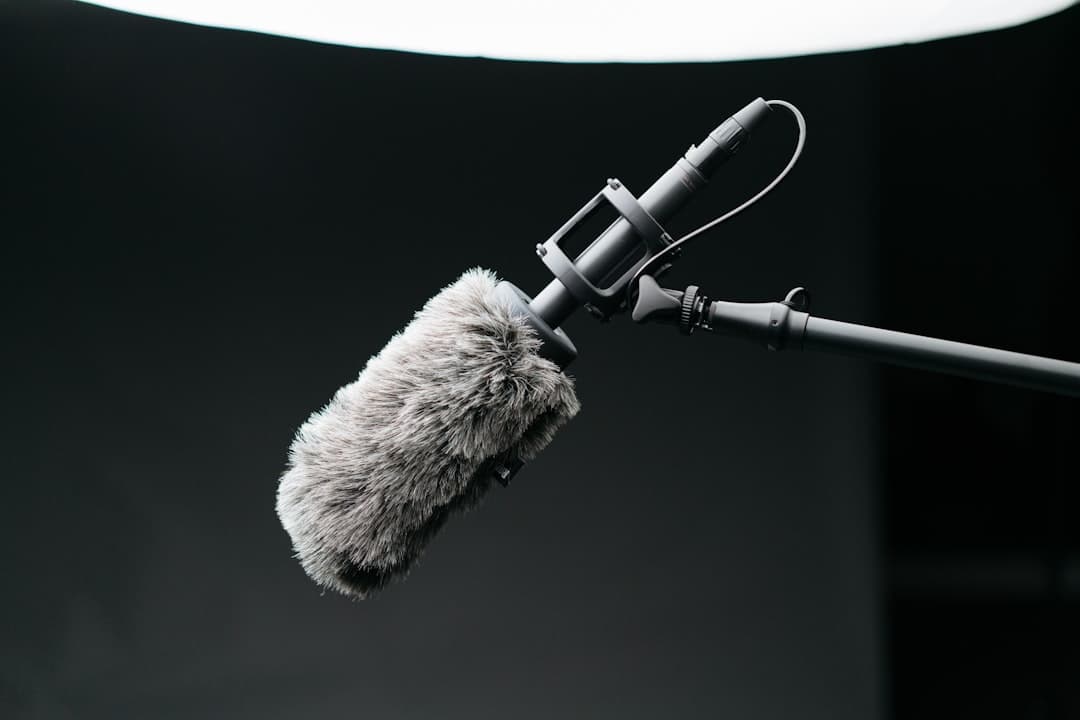
Audio
Audio fundamentals for video
Why bad audio kills good footage — and how to capture clean sound on a small crew
Audio
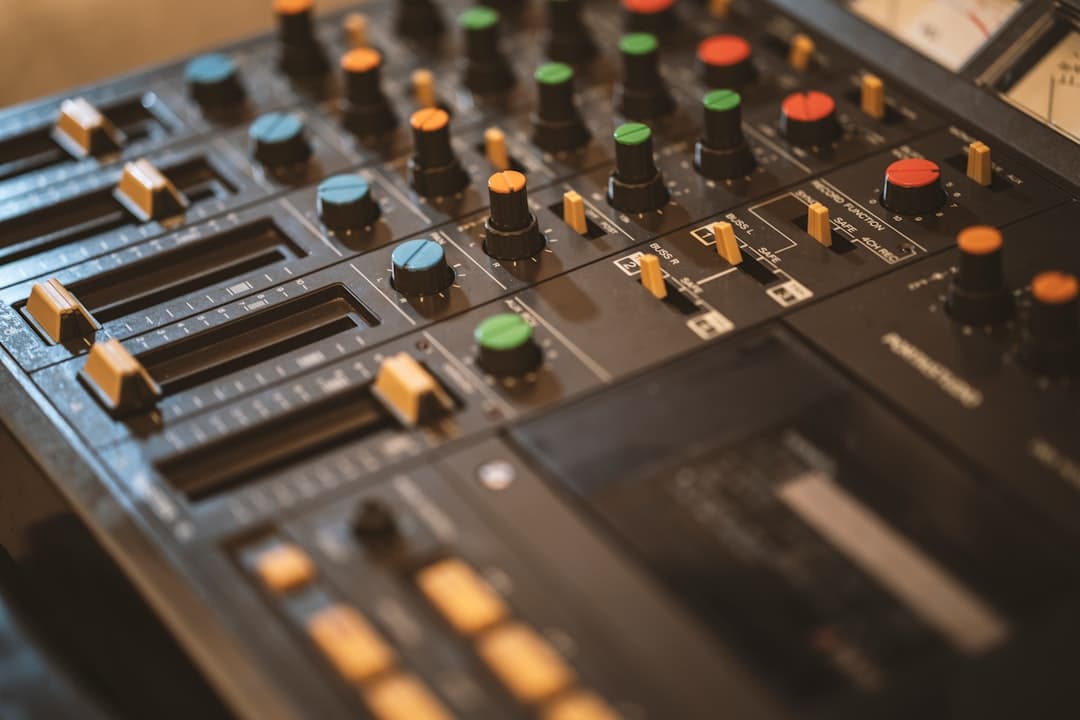
Multi-track audio workflow for narrative
Capturing lavs, boom, ambience, and timecode reference cleanly on a multi-input recorder
Business & freelance
Showcasing your work online
A reel that gets calls back, a portfolio site that works, and the basics of being findable
Found this useful?
Bookmark BOLD University and share it with someone learning the craft. New lessons go up regularly.
Back to University