Camera & rigging
Understanding depth of field
How to get the cinematic look — intentionally, not by accident
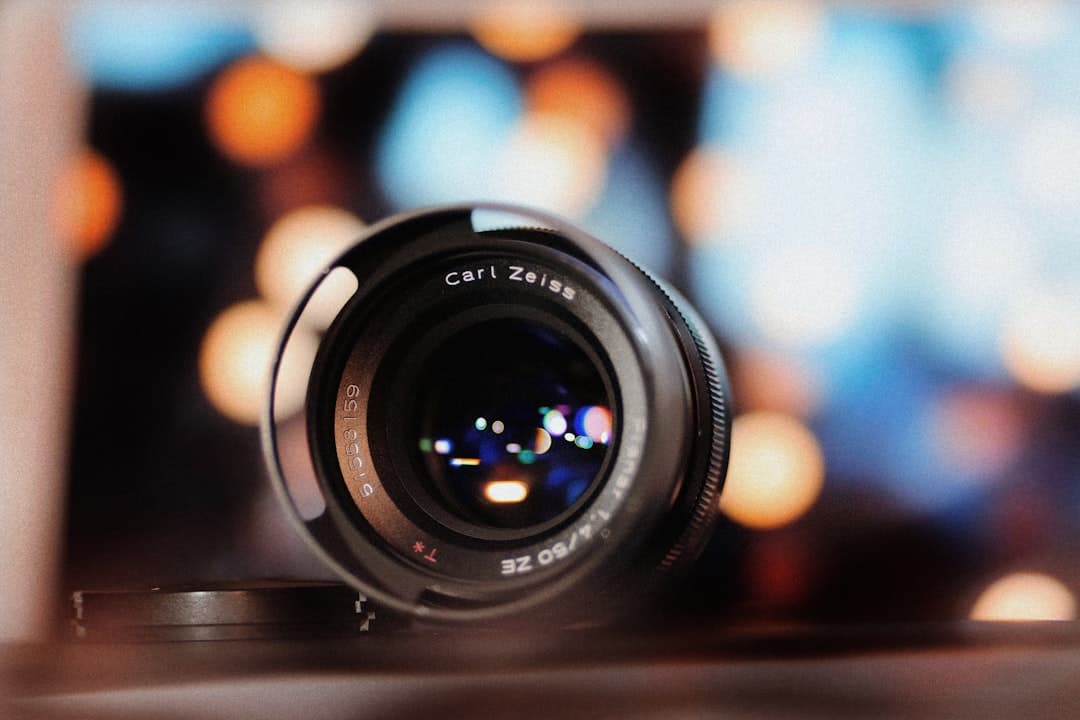
Photo by Alphacolor on Unsplash
What "depth of field" actually means
Depth of field (DOF) is the range of distance from your camera in which things look acceptably sharp. A shallow DOF means only a thin slice of the world is sharp (and everything in front of and behind that slice is blurred). A deep DOF means most or all of the scene is sharp.
The famous "cinematic look" — the in-focus actor with a softly blurred background — is shallow DOF. The everything-in-focus look of a smartphone or a news camera is deep DOF. Neither is better. They communicate different things.
Shallow DOF says: look at this person, the rest doesn't matter. It draws the eye, isolates the subject, creates intimacy.
Deep DOF says: look at this whole scene, all of it is part of the story. Wes Anderson does this on purpose. So does most sports coverage and documentary.
The three controls
Depth of field is determined by three things you control on set:
1. Aperture (f-stop or T-stop). The aperture is the opening in your lens that lets light in. Wider open = shallower DOF. Aperture is expressed as an f-number on stills lenses (f/1.4, f/2.8, f/8) or a T-number on cinema lenses (T1.4, T2.8, T8). Smaller numbers = wider open = shallower DOF. f/1.4 gives you a paper-thin sliver of focus. f/16 gives you nearly everything sharp.
(The reason cinema lenses use T-stops is that they measure actual light transmission — accounting for the small amount that each glass element absorbs — so a T2.8 on one cinema lens passes the same light as T2.8 on another. f-stops are a theoretical calculation. For DOF purposes the two are close enough.)
2. Focal length. Longer focal lengths (a 100mm lens, an 85mm) produce shallower DOF than wider lenses (a 24mm, a 35mm) at the same aperture and subject distance. This is why portraits often use 85mm or 100mm lenses — the same f-stop produces dreamier background blur on the longer lens.
3. Distance to subject. The closer your camera is to your subject, the shallower the DOF. Move three feet closer and you'll dramatically change how much background blur you get, even without touching the lens.
A working mental model
If you want shallower DOF:
- Open the aperture (smaller f-number)
- Use a longer focal length
- Get closer to the subject
If you want deeper DOF:
- Close the aperture (larger f-number)
- Use a wider focal length
- Step back from the subject
That's it. All three controls compound — open the aperture and get closer and use a longer lens, and you'll get razor-thin focus.
Why this is harder to nail than it sounds
The tradeoff: shallow DOF looks beautiful but makes focus pulling (changing focus mid-shot, as your actor moves) genuinely difficult. The thinner your DOF, the more you risk soft footage. On a real set with a moving actor, an aperture of T1.4 means your focus puller is sweating bullets.
Professional sets use a dedicated 1st AC (first assistant camera) whose entire job is to pull focus. They're using a follow-focus tool with marked distances and have measured distances to the actor's mark with a tape measure during rehearsal. They're not eyeballing it.
If you're working solo, this matters. A safer working aperture for solo or small-crew work is T2.8 to T5.6 — still beautiful, still cinematic-looking, but with enough DOF to forgive small focus errors.
The "circle of confusion" and sensor size
You'll sometimes hear that bigger sensors produce shallower DOF. This is partially true — but it's because of how the math compounds with focal length and field of view, not because the sensor itself blurs things.
The practical version: a full-frame camera (36×24mm sensor, like a Sony FX3, Canon R5C, or RED V-Raptor) at 50mm and f/2.8 will produce shallower DOF than a smartphone or a Super 16mm camera at the same f-stop. This is why "full-frame" gets thrown around as a cinematic feature — it's easier to get that shallow look on a larger sensor.
If you're shooting on a Micro Four Thirds, APS-C, or smartphone sensor, you can still get shallow DOF — you just need to open up more, use longer lenses, or get closer.
Common mistakes
- Shooting wide open all the time. T1.4 is gorgeous but punishing. The eye will land sharp; the eyebrow won't. Stop down to T2.8 or T4 and trust that the look is still beautiful.
- Soft footage from missed focus. If you're constantly missing focus, you're shooting too shallow for the setup. Stop down.
- Forgetting that DOF changes with focus distance. Focus pulled to 6 feet vs. 30 feet has wildly different DOF at the same aperture. A wide background-actor shot has way more forgiving DOF than a tight close-up.
- Confusing background blur with bokeh quality. Pretty blur (smooth, organic, no harsh edges) depends on lens design — not just aperture. Cheap zoom lenses wide-open can produce harsh, busy backgrounds. This is why filmmakers obsess over prime lens glass quality.
What to practice this week
Park a person against a textured background (a brick wall, a row of trees, anything with visual interest behind them). Shoot the same headshot composition at:
- T1.4 (or whatever your widest aperture is)
- T2.8
- T5.6
- T11
Don't move — keep camera and subject in the same place. Just change aperture and adjust your light (or shutter, or ISO) to keep exposure the same. Compare the four shots.
You'll see DOF change in real-time. You'll also see how T1.4 might be soft on the cheek when the eye is sharp. After this exercise, you'll never blindly shoot wide-open again — you'll choose your aperture based on what you want the shot to say.
More lessons
Browse all
Camera & rigging
Building a camera rig that doesn’t fight you
Handheld, shoulder, and gimbal — what to build for what shoot
Camera & rigging
Multi-camera shooting
Matching color, syncing time, and managing the crew when you're running more than one camera
Audio
Audio fundamentals for video
Why bad audio kills good footage — and how to capture clean sound on a small crew
Found this useful?
Bookmark BOLD University and share it with someone learning the craft. New lessons go up regularly.
Back to University